Passer au contenu principal
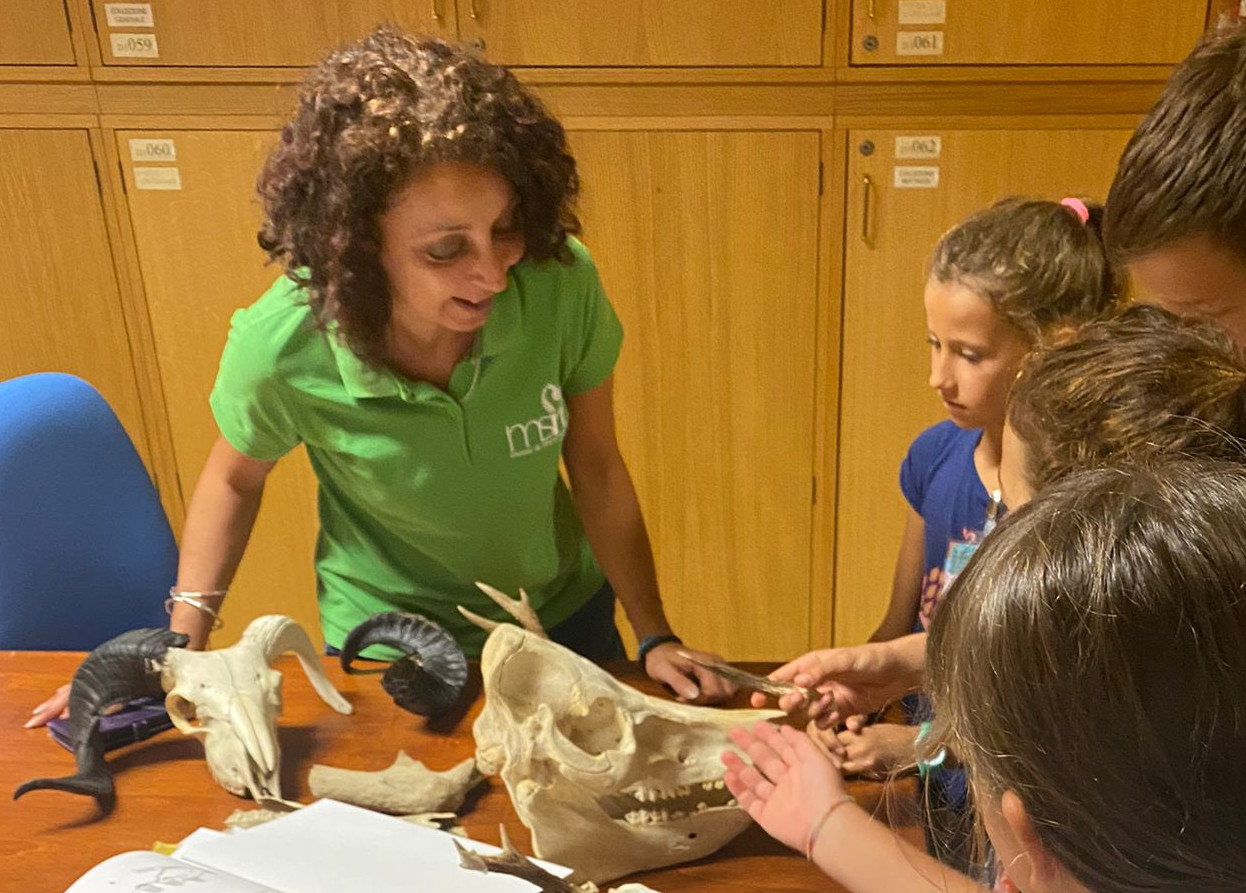
Bambini con ricercatrice

INVESTIGATING THE PAST: SCIENCES APPLIED TO ARCHAEOLOGY

Researchers’ Night 2025

Friday, 26 September 2025, from 5 pm to 8 pm

Archaeological research often draws on the expertise of specialists from other disciplines, whose contributions are essential to complement and enrich the interpretation of data and to reconstruct past environmental and cultural contexts with greater accuracy.

In particular, collaboration with experts in the natural sciences—such as naturalists, biologists and geologists—provides fundamental information about the climate, vegetation and fauna of the area under investigation, as well as the diet, customs and way of life of past populations. This integrated approach makes it possible to gain a broader and more detailed understanding of archaeological sites.

On the occasion of Researchers’ Night, on Friday, 26 September, from 5 pm to 8 pm, information stations will be set up in the evocative Cetacean Gallery of the Natural History Museum. Researchers working in scientific disciplines that support archaeological research will meet the public and present their working methods and the results of their studies.

Some of these specialists contributed to the research project presented in the exhibition “A Roman ostriarium in the Venice Lagoon”, which will remain open to visitors throughout the evening.

Researchers’ Night is an initiative promoted by the European Commission that involves thousands of researchers and scientific institutions across Europe every year. Its aim is to create opportunities for researchers and citizens to meet, promoting scientific culture and raising awareness of research careers in an informal and stimulating setting.

–

The event is organised by the Natural History Museum in collaboration with the Department of Humanities of Ca’ Foscari University of Venice.

 

PARTICIPATION INFORMATION

Admission to the event, taking place on the ground floor from 5 pm to 8 pm, is free of charge, subject to availability.

The Museum will remain open to the public with extended opening hours until 8 pm.
Access to the exhibition galleries requires the purchase of an admission ticket.


INFORMATION STATIONS

The information stations will be presented by Ca’ Foscari University of Venice, the Giancarlo Ligabue Natural History Museum, the Fondazione Museo Civico di Rovereto, CNR-ISMAR Venice, the University of Padua and the University of Florence.

PALYNOLOGY (Adele Bertini, Gabriele Niccolini)
Palynology is the science that studies pollen and other microscopic biological elements found during archaeological excavations in order to understand past environmental conditions. Pollen grains and spores are tiny messengers that tell us about plants, environments and climate, from the past to the present day. At Lio Piccolo, sediments, oyster shells and the plasterwork of the Roman villa reveal, through these tiny witnesses, the relationship between humans and nature. Come and explore with us! Through 3D models and interactive activities, visitors of all ages will be able to discover this invisible world and reflect on the climate changes of yesterday—and today.

ARCHAEOBOTANY (Alessandra Forti)
Archaeobotany studies plant remains—both macro-remains and micro-remains—recovered from archaeological excavations in order to understand the relationship between humans and the environment, reconstruct the vegetation surrounding a site, investigate the use of plant resources and agriculture, and trace the human-driven spread of plant species.

DENDROCHRONOLOGY (Ivana Pezzo)
Dendrochronology is the science that studies the growth rings of trees. Its name derives from two Greek terms: dendron (tree) and chronos (time). In archaeology, dating plays an important role in the interpretation of a context, and dendrochronology, through the analysis of wooden material, can establish the year in which the tree from which it originated was felled, providing an absolute date.

ARCHAEOZOOLOGY (Silvia Zampieri and Silvia Garavello)
Archaeozoology studies animal remains found at archaeological sites—such as bones, teeth and shells—in order to understand the relationship between humans and animals in the past and thereby reconstruct the economic, dietary and cultural life of ancient societies. The evening will offer an opportunity to explore the connections between humans and nature throughout history through the observation of animal remains.

GEOMORPHOLOGY (Paolo Mozzi)
Geomorphology is the branch of geology that studies the shape of the Earth’s surface, its evolution over time and the processes that shape the landscape. Come and explore satellite images, aerial photographs and drone footage to discover rivers of the past, traces of ancient lagoon channels and evidence of former beaches that have since become dry land. Reconstruct the geological evolution of territories inhabited since ancient times.

BIOLOGY (Irene Guarneri)
Understanding the biology and ecology of species provides us with information about present and past communities, environmental conditions, and the ways in which humans living in a particular area used and consumed natural resources. When mollusc shells are found, what can they tell us about their time and about interactions with humans? Explore the evidence and develop your own theories.