Library
Informations
Library
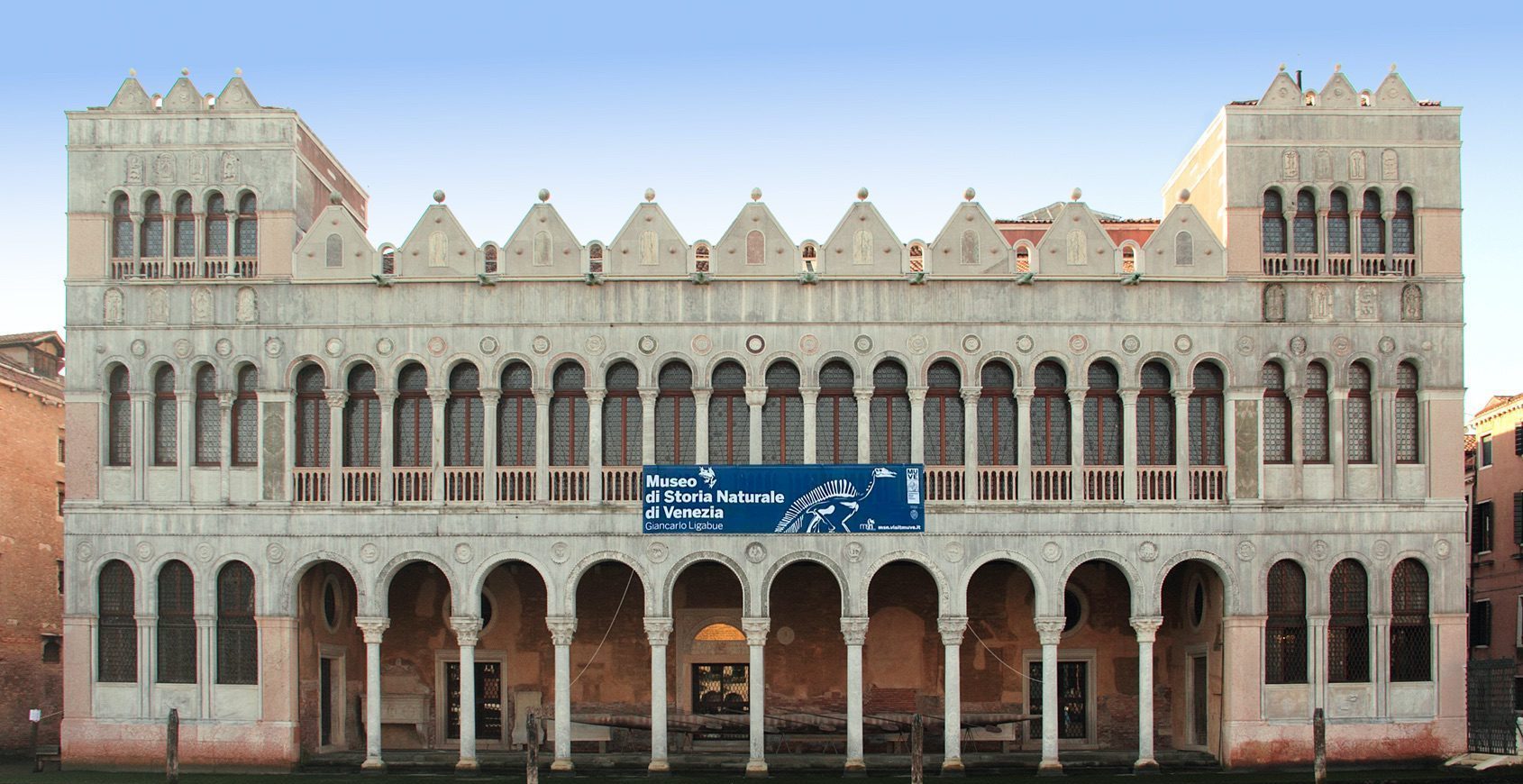
Natural History Museum of Venice Giancarlo Ligabue
Santa Croce 1730,
30135 Venezia
OPENING HOURS
The Library is open from Tuesday to Friday, from 10.30 to 16.30.
Reserving a seat in the reading rooms is not mandatory, but recommended.
Procedures for reserving seats and volumes (in Italian)
L’accesso, la prenotazione del posto e la consultazione dei volumi possono essere effettuati tramite OPAC del Polo VEA fino al giorno precedente. Si raccomanda di cancellare la prenotazione nel caso non si intendesse più recarsi in Biblioteca.
Prima di accedere alla Biblioteca, è necessario registrarsi telematicamente.
Di seguito sono indicate le modalità per:
1 – registrarsi in OPAC, per utenti già in possesso di tessera e per utenti non iscritti
2 – effettuare le richieste di consultazione
3 – prendere appuntamenti per la consultazione
1 – Registrazione degli utenti in OPAC del PoloVEA
L’utente che è già in possesso di tessera può registrarsi dal box della home dell’Opac del PoloVEA:
– collegarsi all’indirizzo dell’Opac del PoloVEA
– cliccare su “Accedi”, in alto a destra per autenticarsi.
In caso di primo accesso bisogna digitare:
– username: che corrisponde al numero di tessera prestito (ad es. BM123, QS123 oppure 123 senza ZERI)
– password: che corrisponde alla data di nascita inserita nel modo seguente: 21/11/2011.
Successivamente l’utente potrà cambiarla seguendo le istruzioni (la password deve essere lunga almeno 8 caratteri e contenere sia lettere che numeri).
Se si è utenti Ca’ Foscari e IUAV utilizzare sempre le rispettive credenziali negli appositi box di autenticazione.
Cliccare sul proprio nome in alto a destra per accedere al proprio Spazio personale, riservato ai singoli utenti. Dallo spazio personale sarà possibile effettuare, controllare e cancellare tutte le operazioni.
L’utente non iscritto può registrarsi per la prima volta dal box della home dell’Opac del PoloVEA:
– cliccare su “Accedi”, in alto a destra per registrarsi. Cliccare su « Non sei ancora registrato? »
Compilare il modulo in tutte le sue parti e scegliere nel menù a tendina la Biblioteca: sarà quindi possibile procedere alla prenotazione dei servizi online.
2 – Richiedere documenti in consultazione tramite Opac del PoloVEA
Per richiedere un documento in consultazione:
– collegarsi all’indirizzo dell’Opac del PoloVEA
– cliccare su “Accedi”, in alto a destra per autenticarsi
– una volta individuato nell’OPAC il documento desiderato cliccare su « Richiesta di consultazione »
– cliccare sul proprio nome in alto a destra per accedere al proprio Spazio personale, riservato ai singoli utenti, dove sarà possibile controllare la propria situazione prestiti: richieste, prenotazioni, scadenze, messaggi ecc.
Possono essere dati in consultazione fino a 15 volumi al giorno, i libri saranno a disposizione degli utenti a partire dal giorno successivo alla richiesta e per i seguenti 10 giorni.
Richieste di consultazione Manoscritti
Per i manoscritti, il lettore che fosse già a conoscenza delle segnature di cui è richiesta la consultazione, potrà comunicarle via e-mail all’indirizzo della Biblioteca cui intende accedere.
È possibile effettuare richieste anche in sede.
3 – Appuntamento per la consultazione tramite OPAC del PoloVEA
Per prenotare un posto per la consultazione:
– collegarsi all’indirizzo dell’Opac del PoloVEA
– cliccare su “Accedi”, in alto a destra per autenticarsi
– cliccare sul proprio nome in alto a destra per accedere al proprio Spazio personale, riservato ai singoli utenti
– nell’area “Prenotazioni” sarà possibile prendere appuntamento per il giorno e l’ora della consultazione, secondo un calendario a fasce orarie, fino al giorno precedente. In questa area è possibile anche cancellare le operazioni effettuate.
CONTACTS
tel. 0412750206
fax 041721000
e-mail: biblioteca.msn@fmcvenezia.it
Digital Reproductions
Digital copies may be requested directly at the Library by completing the appropriate paper form, or online by filling in the following form.
The Library
The Library of the Natural History Museum of Venice Giancarlo Ligabue is one of Italy’s leading natural history libraries and is also recognised internationally. Alongside a substantial collection of books, both ancient and modern, and highly prestigious scientific journals, it preserves documents and correspondence belonging to distinguished naturalists from the Veneto region. It also includes an educational section supporting the Museum’s workshop activities for schools.
Services
Access to the libraries is usually reserved to scholars, researchers and university students preparing their final thesis, or in their third year of study. It can, upon request, be extended to anyone who, for reasons of study, is interested in the material and documents the libraries contain. Access requires registration. The regulations lay down that for registration, one must present a valid identity document and a letter of presentation showing that one needs to consult the library collections for study purposes.
The collections are to be consulted in the study rooms, in line with the procedures laid down in the regulations. There is no outside lending. To facilitate the work of scholars and researchers there is no limit to the number of manuscript or printed works that they can request for consultation.
The reading room can seat a total of 8. Readers may use their personal computers, for which power points are provided.
Staff are on hand to provide information and assist the consultation of catalogues, as well as to distribute the works requested for consultation. The on-duty librarian may be consulted for more detailed bibliographical information, assistance in the use of inventories and research via online catalogues.
Anyone wishing to make a suggestion regarding a purchase of publications or documents of particular interest, should pass the information to the on-duty librarian.
Readers may have material photographed, photocopied or microfilmed within the limits imposed by the need to conserve the material and the legislation regarding authors’ copyright. The costs of this service are to be found in the printed regulations and shall be borne by the readers.
For study purposes only, readers may – with the assistance of the library personnel – take their own photographic reproduction of materials. The application form for this is available in the Library.
As well as attending in person, readers and scholars may apply for bibliographical information regarding the Library’s collections via telephone, fax, letter or email: biblioteca.msn@fmcvenezia.it.
History and extent of the collections
The Library was established together with the Natural History Museum (1923), serving as a specialist information centre supporting the Museum’s research activities.
Its holdings originated from a core collection comprising several scientific libraries acquired through bequests or purchases by the Civic Museum Correr and the Veneto Institute of Sciences, Letters and Arts, and entrusted to the Natural History Museum when the latter became independent from the Museo Correr.
Among these original holdings are the libraries of Nicolò Contarini and Giovanni Zanardini, containing numerous 16th- and 17th-century editions; the library of Gian Domenico Nardo; the scientific works from the library of Emmanuele Antonio Cicogna; and the manuscripts, some of them unpublished, by the aforementioned Contarini and Nardo, as well as by Alberto Carlo Dondi Dell’Orologio.
Of particular value are the monographs by distinguished local naturalists and scholars, together with 19th-century periodicals relating to scientific research carried out in the Veneto region, particularly in Padua by the Accademia Patavina and in Venice by the Veneto Institute.
Following subsequent acquisitions and donations, including part of the Ninni Library, and an extensive publication exchange programme with other museums and scientific institutions, the Library’s holdings now comprise more than 40,000 titles, including books and pamphlets, and approximately 2,500 Italian and international periodical titles.
The Library also houses a substantial collection of prestigious scientific journals, which makes it one of the main reference libraries for the natural sciences at both a national and international level.
There is also a teaching section for schools that provides laboratory and workshop activities.
Collection consistency
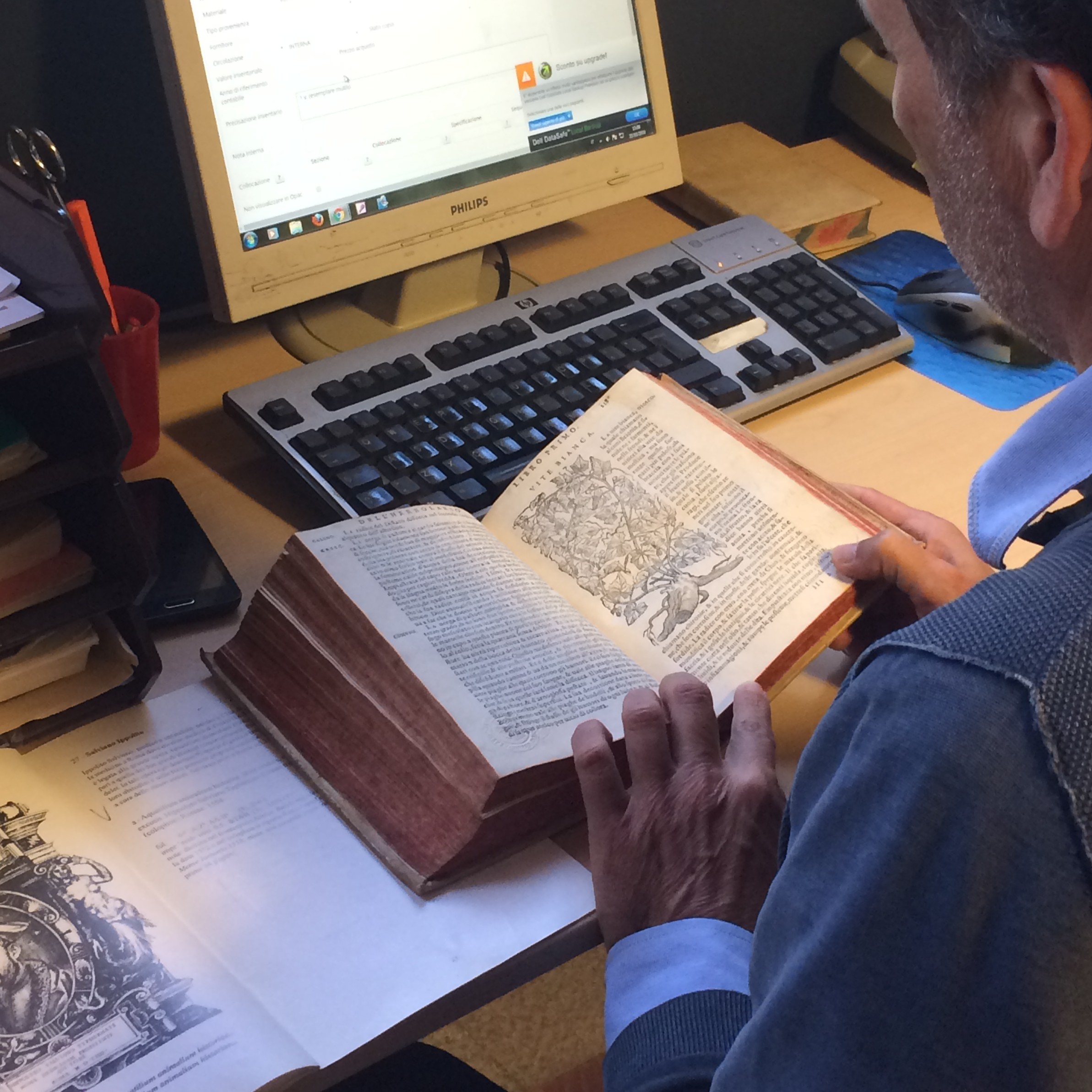
Modern books
40,000 published volumes and opuscules
Antique books
55 16th century publications; 100 17th century publications; 750 18th century publication; 600 19th century publications
Periodicals
Periodicals no longer in publication: 2100
Current periodicals: 620
Miscellaneous material
Nardo Miscellany. Opusules and extracts collected by Giovanni Domenico Nardo (1802-1877). Size: approx 1500 items.
Miscellanies. Opuscules and extracts of scientific interest and a certain rarity, dating 1800-1950. Size: approx. 1,000 items.
Antique collections
Fondo Contarini: Papers of Conte Nicolò Contarini (1780-1849). Being Catalogued. Size: approx. 13,000 manuscripts.
Fondo Nardo: Papers of Gian Domenico Nardo (1802-1877). Uncatalogued. Size: approx. 15,000 manuscripts.
Fondo Dondi Dell’Orologio: Papers of Marchese Antonio Carlo Dondi Dell’Orologio (1751-1801). Uncatalogued. Size: approx. 2,000 manuscripts.
Fondo Miani: Papers of Giovanni Miani (1810-1872). Uncatalogued. Size: 101 folders.
Naturalistic Graphic Archive
The Naturalistic Graphic Archive of the Natural History Museum of Venice Giancarlo Ligabue comprises approximately 3,000 plates created to support research and science communication activities, most of them produced by Gioella D’Este, the Museum’s scientific illustrator from 1972 to 2010. Only a small part of the graphic holdings comes from occasional donations and from plates produced by students of the Venice Academy of Fine Arts who completed internships at the Museum’s graphic studio.
The scientific and natural history illustrations were primarily used in the Museum’s scientific bulletin, which during the 1970s and 1980s focused particularly on entomological research. Produced in close collaboration with specialists in different fields, using a stereomicroscope for small specimens and anatomical preparations, India ink drawings on white card constitute a significant part of the graphic holdings, both in terms of quality and quantity.
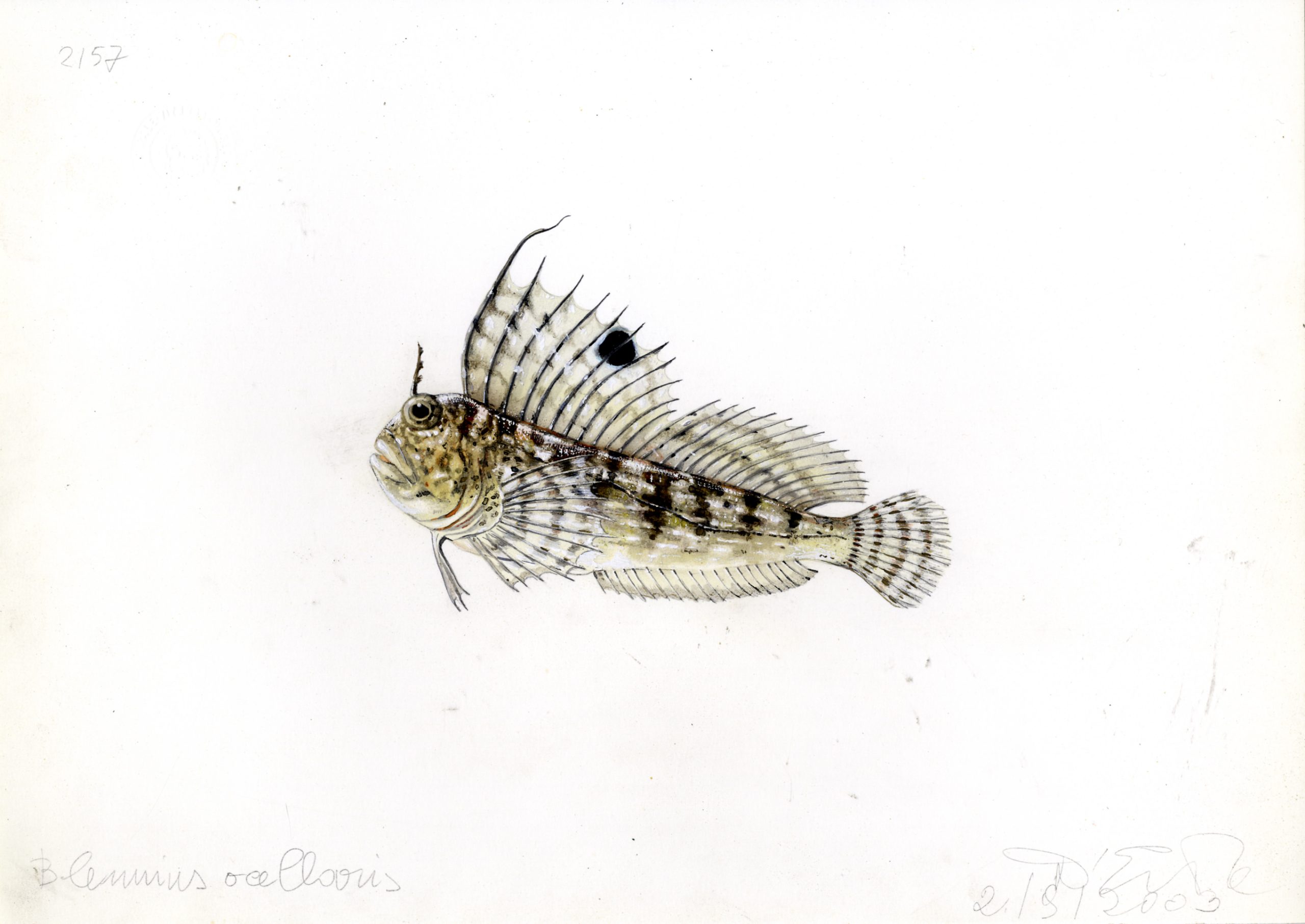
Over the years, this substantial body of highly detailed and specialised plates was complemented by numerous colour plates, including works intended for science communication, some of which are displayed in the Museum’s galleries.
The graphic studio supported research into specific groups of local fauna, with the aim of promoting knowledge of the natural environment through appropriately illustrated publications. Examples include the colour plates depicting marine organisms from the tegnùe, used in a publication produced in collaboration with ARPAV. A smaller area of activity involved the design of posters, leaflets and other promotional materials.
The computerised archive of the catalogued material can be consulted by appointment.
Catalogues
The online catalogue can be consulted in the Reading Room. A simple yet varied indexing system (by author, title, subject etc.) makes it possible to identify the publication desired quickly and easily.
Since 2009, the Library has been part of the Venice SBN Library Network, using the SBN Sebina Open Library (SOL) application software to catalogue its modern library holdings and new acquisitions.
LVDL – Laguna di Venezia Digital Library: a thematic digital library dedicated to the Venice Lagoon environment, this is in the process of being set up within the Library and is the result of collaboration between the Natural History Museum, the CNR-ISTI in Pisa, the ‘Vallisneri’ Biblioteca Biologico-Medica (Padua University) and the Department of Environmental Sciences (Venice University). It is just one of the projects of the Osservatorio Naturalistico della Laguna.
NBM – Nuova Biblioteca Manoscritta: an online catalogue of manuscripts held in the libraries of the Veneto region, developed as part of the corresponding regional project.